Horror

5 titles reviewed by International Review of Books this week.

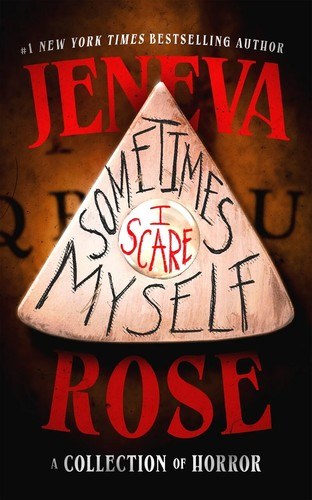
Cover of Sometimes I Scare Myself by Jeneva Rose
Bestseller

Sometimes I Scare Myself

Jeneva Rose

Horror
Blackstone Publishing · 22 September 2026

Short review (171 words)

Jeneva Rose made her name with twisty domestic thrillers, and in Sometimes I Scare Myself she steps confidently into horror with three linked-in-spirit stories that suit long October nights. In the first, a thirtieth-birthday party with a hired medium goes terribly wrong, and the guests make a decision that will haunt them. The second follows the Dalton family into a house whose previous owners all met grim ends, seen through the eyes of a new mother already struggling with exhaustion and doubt. The third visits a roadside shop selling cursed objects and a cabin cut off by a storm.

Rose keeps the thriller writer's instinct for momentum: each story is lean, fast and built around a sharp hook. The scares come from guilt, isolation and the creeping sense that the people around you might be the real danger. It is a short, accessible collection that works well for readers who are curious about horror but wary of anything too gruesome, and it has spent five weeks on the hardcover bestseller list.

Chart & sources

Publisher / retailer page

Full review (246 words)

Jeneva Rose made her name with twisty domestic thrillers such as The Perfect Marriage, and in Sometimes I Scare Myself she moves confidently into horror with three stories that suit long autumn nights. Each one is self-contained, but they share a fascination with guilt and with the moment ordinary people realise they have crossed a line.

In the opening story, a thirtieth-birthday celebration featuring a hired medium goes badly wrong, and the guests make a choice that will follow them. The second, and perhaps the strongest, takes the Dalton family into a house with a dreadful history, told largely through the perspective of a new mother already wrestling with sleeplessness and self-doubt; Rose uses that fragile state of mind to keep the reader unsure what is real. The final story visits a roadside shop where every item comes with a curse, then strands its characters in a cabin during a storm.

Rose keeps the thriller writer's instinct for pace. The prose is lean, the hooks arrive early, and each story builds toward a satisfying sting rather than relying on gore. The horror is mostly psychological and social, rooted in secrets and the fear that the people closest to you cannot be trusted. That makes the collection a good gateway for readers who enjoy suspense and want to try something spookier without committing to a doorstop. Five weeks on the hardcover fiction bestseller list suggest plenty of her existing fans have already followed her into the dark.
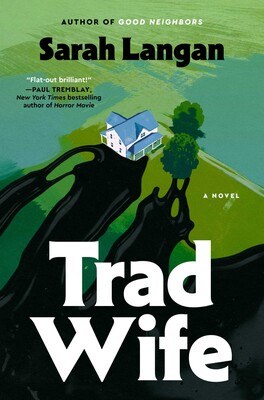
Cover of Trad Wife by Sarah Langan
Bestseller

Trad Wife

Sarah Langan

Horror
Atria Books · 29 September 2026

Short review (168 words)

Sarah Langan, author of Good Neighbors, has a knack for finding the horror hidden inside the things people post online, and Trad Wife may be her most timely novel yet. Jenny Kaplan is a journalist whose career has taken a public hit. Looking for a comeback, she lands a profile of Mia Wright, a hugely popular trad-wife influencer who shares a picture-perfect life of homemaking and motherhood with her seven children on a Pennsylvania farm.

Once Jenny arrives, the idyll starts to wobble. There are odd rhymes in the nursery, gaps in her own memory, and a growing feeling that the farm is not what it appears on screen. Langan blends social satire with genuine creepiness, asking pointed questions about performance, nostalgia and who benefits when women are sold an old-fashioned fantasy. It never reduces Mia to a cartoon, which makes the unease more effective. Readers who enjoyed the cult-adjacent chills of Rosemary's Baby or the satire of The Stepford Wives will find a sharp, modern update here.

Chart & sources

Publisher / retailer page

Full review (247 words)

Sarah Langan, author of Good Neighbors and A Better World, has a talent for finding the dread lurking inside the lives people curate for public view, and Trad Wife may be her most timely novel yet. Jenny Kaplan is a journalist whose reputation has taken a damaging public knock. Hoping for a comeback, she secures a profile of Mia Wright, a hugely popular trad-wife influencer who shares a picture-perfect life of baking, homeschooling and devotion to her seven children on a Pennsylvania farm.

Once Jenny arrives, the idyll begins to fray. The children recite strange nursery rhymes, Jenny starts losing chunks of time, and she senses that the farm runs on rules no one will explain. As her investigation deepens, the line between a story about online performance and something genuinely uncanny grows thinner, and Jenny has to ask whether she is still the one doing the reporting.

Langan balances social satire with real chills. She is interested in why so many people find the trad-wife aesthetic comforting, and she resists turning Mia into a simple villain, which makes the unease far more effective. The novel also has a lot to say about ambition, motherhood and the bargains women are pressured to make, but it never forgets to be a page-turner. It sits comfortably beside classics such as Rosemary's Baby and The Stepford Wives while feeling rooted in the present feed-scrolling moment. A smart, unsettling pick for book clubs looking for something that will start an argument.

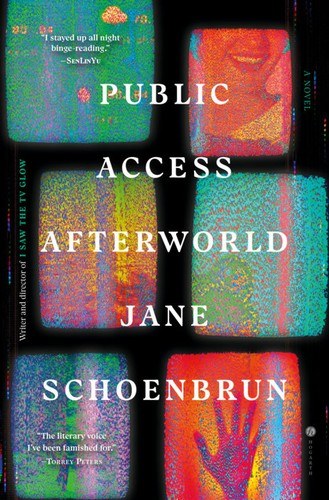
Cover of Public Access Afterworld by Jane Schoenbrun
Bestseller

Public Access Afterworld

Jane Schoenbrun

Horror
Hogarth · 27 October 2026

Short review (174 words)

Jane Schoenbrun, the filmmaker behind I Saw the TV Glow, makes a striking debut as a novelist with Public Access Afterworld, a sprawling, eerie book about the stories that reach us through screens. The novel moves across decades: a local weatherman in late-1980s Dallas, two teenagers in 2009 as American television switches from analogue to digital, and, years later, a content moderator at an enormous tech company in Austin. Linking them is a pirate television channel that seems to broadcast from somewhere beyond the static.

This is horror of atmosphere and identity rather than jump scares. Schoenbrun is fascinated by how media shapes who we think we are, and by the lonely people who find something like home in a flickering signal. The structure is ambitious and at six hundred pages it demands patience, but the prose is hypnotic and the mood unforgettable. Fans of the film will recognise the themes, while newcomers who like David Lynch, Mark Z. Danielewski or creepypasta lore will find a strange and rewarding world to get lost in.

Chart & sources

Publisher / retailer page

Full review (248 words)

Jane Schoenbrun, the filmmaker behind the cult hit I Saw the TV Glow, makes a striking debut as a novelist with Public Access Afterworld, a sprawling and eerie book about the stories that reach us through screens and the people who disappear into them.

The novel unfolds across several decades. In late-1980s Dallas, a local weatherman encounters something he cannot explain. In 2009, as American television switches from analogue to digital broadcasting, two teenagers, David and Erin, become fixated on a signal that should not exist. Years later, Bethany Peters, a trans content moderator at a vast tech company in Austin, finds herself drawn into the same mystery. Linking them all is a pirate channel that appears to transmit from somewhere beyond the static.

This is horror built on atmosphere, memory and identity rather than jump scares. Schoenbrun is fascinated by how media shapes our sense of self, and by the outsiders who find a kind of belonging in late-night broadcasts and online rabbit holes. The book also deals with heavy emotional territory, handled with care, and readers should expect some difficult moments. The structure is ambitious, shifting voices and formats, and at over six hundred pages it asks for patience. Those willing to settle in will be rewarded with hypnotic prose and a mood that lingers long after the last page. Admirers of the film will recognise its preoccupations, and readers who love David Lynch, House of Leaves or internet folklore will find plenty to obsess over.

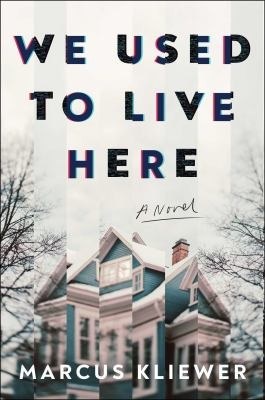
Cover of We Used to Live Here by Marcus Kliewer
Bestseller

We Used to Live Here

Marcus Kliewer

Horror
Atria/Emily Bestler Books · 18 June 2024

Short review (171 words)

Marcus Kliewer's debut has quietly become one of the most reliable horror sellers of recent years, and it is still sitting in the US top dozen this autumn. The setup is beautifully simple. Charlie and her partner Eve have bought a fixer-upper, hoping it will be the fresh start they need. One afternoon a family knocks on the door: they used to live there, they explain, and would love a quick look around.

Saying yes seems harmless. What happens next is best discovered without warning, but Kliewer is superb at building dread from small details, polite conversations that go on too long and the uneasy feeling that something in the house has shifted. The short chapters and puzzle-box structure make it compulsive, and the book plays cleverly with what Charlie can and cannot trust. It is less about monsters than about hospitality, boundaries and the fear of losing control of your own home. A perfect choice for readers who like their horror tight, unsettling and impossible to put down after dark.

Chart & sources

Publisher / retailer page

Full review (249 words)

Marcus Kliewer's debut has quietly become one of the most dependable horror sellers of recent years, and it is still sitting in the US top dozen this autumn. Its premise is beautifully simple. Charlie and her partner Eve have bought a rambling fixer-upper, hoping it will give them a fresh start. One day a family appears on the doorstep: they used to live in the house, they say, and would love a quick look around for old times' sake.

Agreeing seems like the decent thing to do. What follows is best discovered without any warning, so we will only say that the visit does not go as planned and that Charlie soon struggles to understand what is happening in her own home. Kliewer is excellent at building dread out of tiny details: a conversation that lasts a beat too long, a door that is not where it should be, a guest who seems far too comfortable.

The short chapters and puzzle-like structure make the book hard to put down, and Kliewer plays cleverly with Charlie's uncertainty so that the reader is never quite sure who or what to trust. Underneath the scares lie real questions about relationships, boundaries and the vulnerability of opening your door to strangers. It is not a gory novel; its power comes from tension and disorientation. For anyone who enjoyed the slow-burn chills of Shirley Jackson or the modern unease of Riley Sager, this is a tight, unsettling read best saved for a dark evening.

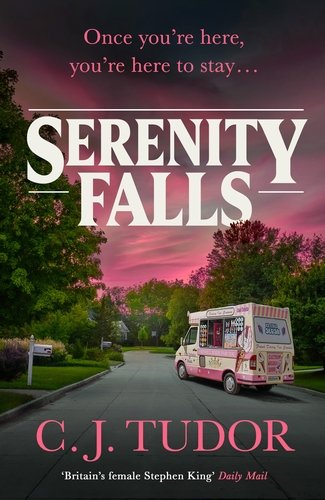
Cover of Serenity Falls by C. J. Tudor

Serenity Falls

C. J. Tudor

Published in the United Kingdom

Horror
Michael Joseph · 10 September 2026

Short review (180 words)

C. J. Tudor, the British author behind The Chalk Man and The Burning Girls, turns her eye on the American dream in Serenity Falls, a creepy slow-burn chiller that was featured in The Guardian's September round-up of the best new horror.

Widower Dan and his daughter Sadie leave a troubled past in England for a fresh start in Serenity Falls, a planned community in Florida that prides itself on having no crime at all. The houses are pristine, the neighbours are friendly and the lawns are perfect. Then a dead body turns up in their swimming pool, and it soon emerges that this idyllic town has seen a surprising number of unfortunate accidents in its fifty-year history.

Tudor is excellent at the gradual creep of wrongness: abandoned houses, odd behaviour and polite smiles that hide something. The father-daughter relationship gives the book an emotional anchor, and her dark humour keeps the pages turning. Comparisons with The Stepford Wives and classic Stephen King are earned. It is a satisfying pick for readers who like their horror suburban, mysterious and steadily unnerving.

Coverage & sources

Publisher / retailer page

Full review (248 words)

C. J. Tudor has built a strong following with The Chalk Man, The Burning Girls and The Drift, novels that sit somewhere between crime and horror. Serenity Falls, published by Michael Joseph in September and reviewed by Lisa Tuttle in The Guardian's round-up of recent horror, is one of her most enjoyable books yet, swapping English villages for the manicured lawns of Florida.

The premise is classic. Dan, a widower, and his daughter Sadie move from the UK to Serenity Falls, a carefully planned community that boasts of having no crime. It seems the perfect place to start again. Almost immediately, though, a body is discovered in their pool, and as Dan starts asking questions he learns that the town has a long record of fatal accidents stretching back over its fifty years. As the community prepares to celebrate its anniversary, more odd discoveries pile up, from empty houses to unexplained activity at night.

Tudor's great skill is in making the ordinary sinister. Neighbourly kindness feels like surveillance, and rules that seem quaint gradually look like something worse. She balances suspense with warmth, particularly in the relationship between Dan and Sadie, and with the wry humour that runs through her work.

The book is long, and the middle section occasionally lingers, but the payoff is worth the wait. It will appeal to fans of Stephen King's small-town horror, Ira Levin's The Stepford Wives and anyone who has ever suspected that a town seemed too good to be true.

Know a book we should review? Suggest a bookThe book you suggest must not be written by you as a writer or from someone you are related to or that was published by a publisher you work for. It must be an independent suggestion.