Puzzle Mysteries (rising)

4 titles reviewed by International Review of Books this week.

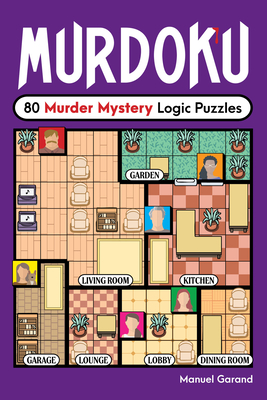
Cover of Murdoku: 80 Murder Mystery Logic Puzzles by Manuel Garand
Bestseller

Murdoku: 80 Murder Mystery Logic Puzzles

Manuel Garand

Puzzle Mysteries (rising)
Puzzlewright Press (Union Square & Co.) · 28 October 2025

Short review (183 words)

Murdoku is the book that turned murder-mystery logic puzzles into a chart force, and it is still climbing. It is now No. 5 across all books on Amazon UK and No. 13 on Amazon US, and it has spent 30 weeks on Publishers Weekly's trade paperback list, reaching No. 1 in late October. Its sequel and newer rivals such as The Killer Isn't Alice are charting alongside it.

Each of the 80 puzzles is a small illustrated crime scene laid out on a grid. As in sudoku, every suspect must sit in exactly one row and one column, but the rooms, furniture and objects also carry clues. Place everyone correctly and the killer is revealed. Difficulty rises from gentle to fiendish.

It distils the most satisfying part of a detective story, the moment the pieces click, into a quarter of an hour, and it is screen-free and easy to share across generations. There is little narrative, and seasoned solvers may find the early puzzles easy. As an introduction to the trend, or a stocking filler for a crime fan, it remains the benchmark.

Chart & sources

Publisher / retailer page

Full review (267 words)

Murdoku is the book that turned murder-mystery logic puzzles from a novelty into a chart force, and a week after our launch edition it is still climbing. It has risen to No. 5 across all books on Amazon UK, it is No. 13 on Amazon US, and it has spent 30 weeks on Publishers Weekly's trade paperback list, where it reached No. 1 in late October. Its sequel, Back in Time, and newer rivals such as The Killer Isn't Alice are now charting alongside it, which tells you how big this corner of the market has become.

The concept is elegant. Each of the 80 puzzles is a small illustrated crime scene laid out on a grid. As in sudoku, every suspect must sit in exactly one row and one column, but the rooms, furniture and objects in the illustration also carry clues. Place everyone correctly and the killer is revealed. Difficulty rises from gentle to fiendish, so it works for casual solvers and seasoned puzzlers alike.

What makes it so appealing is the way it distils the most satisfying part of a detective story, the moment the pieces click, into a quarter of an hour. It is screen-free, easy to share and works across generations, which is why it is thriving as Christmas approaches.

Readers looking for narrative will find little here: the crimes are scenarios, not stories. And committed logic fans may find the early puzzles too easy. But as an introduction to the trend, or a stocking filler for a crime fan, it remains the benchmark the rest of the genre is measured against.
Bestseller

Murdle: Solve 100 Devilishly Devious Murder Mystery Logic Puzzles

G. T. Karber

Puzzle Mysteries (rising)
Souvenir Press (Profile Books) (UK) · 22 June 2023

Short review (180 words)

Every boom needs an originator, and in the murder-puzzle craze that is G. T. Karber's Murdle. First published in 2023, it is enjoying a remarkable late surge: No. 10 across all books on Amazon US and No. 17 on Amazon UK when we checked. Its new spin-off, Murdle Heist, has also joined Publishers Weekly's trade paperback list.

The format crosses Cluedo with a classic logic grid. Each case gives you suspects, weapons and locations, plus a handful of clues and statements, and you work out who did it, with what and where, by elimination. A recurring cast of eccentric characters and a running detective persona make it read almost like a collection of tiny interactive mysteries.

Early cases teach the method gently; later ones bring lying suspects and layered deductions that demand real concentration, while the puns keep the tone light. Readers who find logic grids tedious will not be converted, and a hundred cases on one engine can feel repetitive in a single sitting. Taken a case at a time, it remains the best entry point to the genre.

Chart & sources

Publisher / retailer page

Full review (266 words)

Every boom needs an originator, and in the murder-puzzle craze that is G. T. Karber's Murdle. First published in 2023, it is enjoying a remarkable late surge: No. 10 across all books on Amazon US for the St. Martin's Griffin edition and No. 17 on Amazon UK for the Souvenir Press edition when we checked. Karber's latest spin-off, Murdle Heist, has also joined Publishers Weekly's trade paperback list. Few puzzle books manage that kind of longevity, let alone a second wind three years after release.

The format crosses Cluedo with a classic logic grid. Each case gives you a cast of suspects, a set of weapons and locations, and a handful of clues and statements. You work out who did it, with what and where, by elimination, much as a golden-age detective would. Karber wraps the logic in a recurring cast of eccentric characters and a running detective persona, so the book reads almost like a collection of very short, very interactive mysteries.

The difficulty curve is well judged. Early cases teach the method gently, and later ones introduce lying suspects and layered deductions that demand real concentration. The humour, all puns and absurd names, keeps the tone light even when the logic gets knotty.

Readers who find logic grids tedious will not be converted, and a hundred cases built on the same engine can feel repetitive if solved in one sitting. Taken a case or two at a time, though, it is a delight. It remains the best entry point to the genre, and its renewed success suggests the boom is broadening rather than fading.

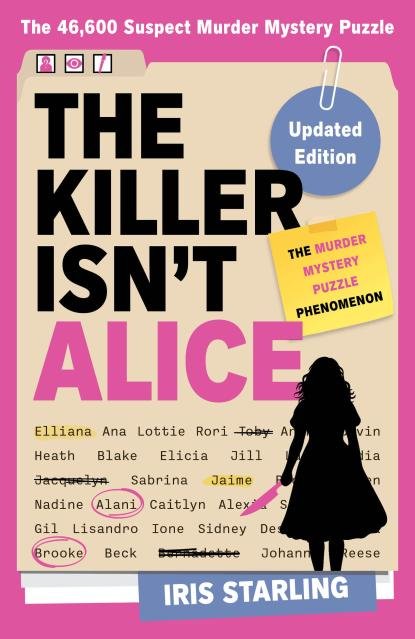
Cover of The Killer Isn't Alice by Iris Starling

The Killer Isn't Alice

Iris Starling

Puzzle Mysteries (rising)
Little, Brown and Company (US) · 1 September 2026

Short review (173 words)

The murder-puzzle boom we flagged last week has a new front-runner. Iris Starling's The Killer Isn't Alice first appeared in February 2026. After a 16-way UK auction and a Little, Brown deal in the US, a revised edition is now No. 4 across all books on Amazon UK and No. 4 on Publishers Weekly's trade paperback list.

The hook is in the subtitle: 46,600 suspects and one killer. Alice Starling is missing, and the police have found a body, a cryptic note and a folder of names. Alice leaves you 18 clues, and your job is to eliminate everyone who fails to fit until one name remains.

Where Murdle and Murdoku offer dozens of short cases, this is one sustained investigation, closer to an escape room in book form. The revised edition adds new graphics, a new culprit and a bonus puzzle. The story is thin by design, so readers who want atmosphere should stick to crime novels. For lovers of deduction, it is an ingenious challenge and an obvious Christmas present.

Chart & sources

Publisher / retailer page

Full review (258 words)

The murder-puzzle boom we flagged last week has a new front-runner. Iris Starling's The Killer Isn't Alice first appeared in February 2026. After a 16-way auction in the UK, reported by The Bookseller, and a Little, Brown deal in the US, a revised edition is now on both sides of the Atlantic. It is No. 4 across all books on Amazon UK and No. 4 on Publishers Weekly's trade paperback list.

The hook is in the subtitle: 46,600 suspects and one killer. Alice Starling is missing, and in her apartment the police find a dead body, a cryptic note and a folder of names. Alice protests her innocence and leaves you 18 clues. Your job is to work through the list methodically, eliminating everyone who fails to fit, until a single name satisfies every condition.

Where Murdle and Murdoku offer dozens of bite-sized cases, this is one sustained investigation. That makes it feel closer to an escape room in book form, a project to return to over several evenings rather than a quick puzzle on the train. The revised edition adds updated graphics, a new culprit and a bonus puzzle, so owners of the original are not simply buying the same book twice.

Its narrative is thin by design: the story exists to frame the deduction. Readers who want characters and atmosphere should stick with conventional crime fiction. But for anyone who loves the logic of a whodunnit, it is an ingenious, absorbing challenge, and it makes an obvious Christmas present for the puzzler who has everything.

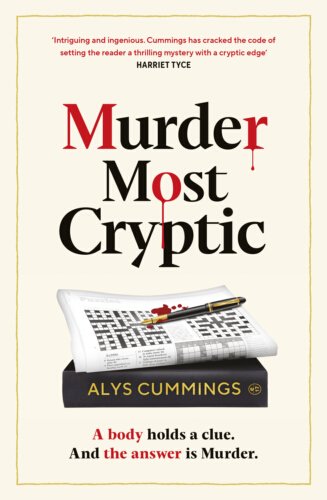
Cover of Murder Most Cryptic by Alys Cummings

Murder Most Cryptic

Alys Cummings

Published in the United Kingdom

Puzzle Mysteries (rising)
Michael Joseph · 8 October 2026

Short review (189 words)

Crime and crosswords collide in Alys Cummings's debut, a puzzle mystery reviewed in The Guardian's October crime round-up and a natural fit for fans of Murdle and Richard Osman. Cummings, a former local newspaper journalist and BBC Panorama staffer from the north-east of England, brings both newsroom savvy and a setter's mischief to the page.

Nina is a promising young journalist who is also an alcoholic. Once a week she attends a recovery group in a church hall. One night a stranger walks in, and the group assume he is a new member, until he promptly drops dead. The police see nothing more than an accident, but in the dead man's pocket is a cryptic crossword clue whose answer is Murder. When more threatening clues begin appearing in a newspaper crossword, Nina and her fellow group members decide to crack the case themselves.

The clues are woven through the story for readers to solve, with answers provided, which makes the book unusually interactive. What gives it depth is the honest portrayal of addiction and recovery beneath the fun. It is a clever, warm and distinctive debut. Sharpen your pencils.

Coverage & sources

Publisher / retailer page

Full review (263 words)

Murder Most Cryptic is the debut novel of Alys Cummings, a journalist who worked on local newspapers, for a news agency at the Old Bailey and for BBC Panorama. Published by Michael Joseph in October and featured in Laura Wilson's Guardian crime round-up, it is a puzzle mystery with a genuinely fresh hook: the clues are cryptic crossword clues, and readers can try to solve them alongside the characters.

The heroine, Nina, is a talented young reporter and a recovering alcoholic who goes to a weekly support group in a local church hall. When an unfamiliar man joins one evening, everyone assumes he has come for help. Moments later he collapses and dies. The police conclude it was an accident, but the group find a crossword clue in his pocket, and the answer is Murder. More clues then start to appear in a newspaper's crossword, each more menacing than the last, and the group realise one of them could be next.

Cummings plays fair with her puzzles, building them into the narrative and supplying the solutions at the end, so solvers and non-solvers alike can enjoy the ride. The cast of misfits is likeable, and their shared struggles with addiction lend the story more emotional weight than the average cosy mystery. There is a darker edge, too, as the threats escalate.

The tone occasionally wobbles between light-hearted puzzling and serious subject matter, and the plot leans on coincidence at times. Still, this is an inventive, entertaining debut, ideal for anyone who starts the day with a crossword and ends it with a whodunnit.

Know a book we should review? Suggest a bookThe book you suggest must not be written by you as a writer or from someone you are related to or that was published by a publisher you work for. It must be an independent suggestion.